

empty
 
 
20.05.2026 09:05 AM
Inflation in the UK Unexpectedly Falls Sharply

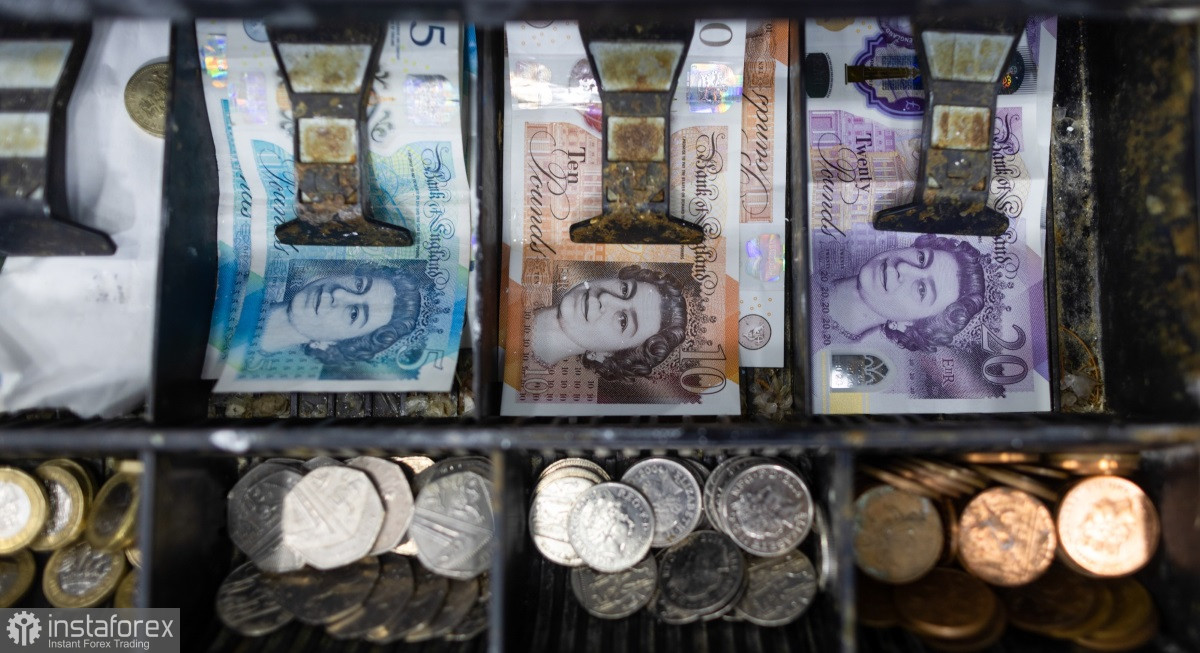
Today, the UK Office for National Statistics released April inflation data that significantly exceeded expectations. The pound reacted to this news quite predictably—initially declining, but then quickly recovering.

This image is no longer relevant

The report indicated that the Consumer Price Index (CPI) rose by 2.8% year-on-year, down from 3.3% in March, while the market had expected a decline to 3.0%. At first glance, this seems like good news; however, it is essential to understand that this is a temporary phenomenon and not a trend reversal.

The slowdown in inflation is primarily attributed to the energy regulator Ofgem, which implemented a new price cap on electricity and gas from April 1. Electricity prices fell by 8.4% in April after rising 2.9% in March, and this was the main driver of the overall decline. In other words, the data were improved not by the economy but through an administrative decision by the central bank.

Regarding core inflation, it also decreased: the Core CPI now stands at 2.5% compared to 3.1% in March, and inflation in the services sector dropped from 4.5% to 3.2%. This is a somewhat more reassuring signal, as the Bank of England pays particular attention to services when making rate decisions.

As mentioned earlier, it is important to understand that while inflation took a step back in April, it is preparing for a leap by the end of spring. High energy prices are expected to push inflation above 4% this year. Deutsche Bank anticipates that following the April drop, inflation will recover in May and beyond as the Iranian shock begins to fully reflect in the data. Household gas bills are expected to rise only in the summer, and it is then that the report will reveal the true picture.

Meanwhile, markets are pricing in a 25-basis-point rate hike from the BoE at the July meeting, raising it to 4%. The central bank is closely monitoring the "second wave effects": rising wage demands and the pass-through of costs to consumers. In the baseline scenario, the central bank expects inflation to be at 3.6% by the end of 2026, while in the worst-case scenario, it could reach 6.2% by early 2027.

For the British pound, today's data presents a dual situation. The decline in inflation below expectations theoretically eases pressure for aggressive rate hikes, which weakens support for the pound. However, the market clearly understands the temporary nature of the April result and, judging by the ongoing expectations for a rate hike in July, is in no hurry to revise monetary policy forecasts. Likely, the impact of this data on the pound will be limited—until the May figures reveal how deeply the Iranian energy shock has already seeped into British inflation.

Miroslaw Bawulski,
Analytical expert of InstaForex
© 2007-2026
Summary
Urgency
Analytic
Maxim Magdalinin
Start trade
Earn on cryptocurrency rate changes with InstaForex
Download MetaTrader 4 and open your first trade
  • Grand Choice
    Contest by
    InstaForex
    InstaForex always strives to help you
    fulfill your biggest dreams.
    JOIN CONTEST
  • Chancy Deposit
    Deposit your account with $3,000 and get $9000 more!
    In May we raffle $9000 within the Chancy Deposit campaign!
    Get a chance to win by depositing $3,000 to a trading account. Having fulfilled this condition, you become a campaign participant.
    JOIN CONTEST
  • Trade Wise, Win Device
    Top up your account with at least $500, sign up for the contest, and get a chance to win mobile devices.
    JOIN CONTEST
  • 30% Bonus
    Receive a 30% bonus every time you top up your account
    GET BONUS

Recommended Stories

Can't speak right now?
Ask your question in the chat.
Widget callback